
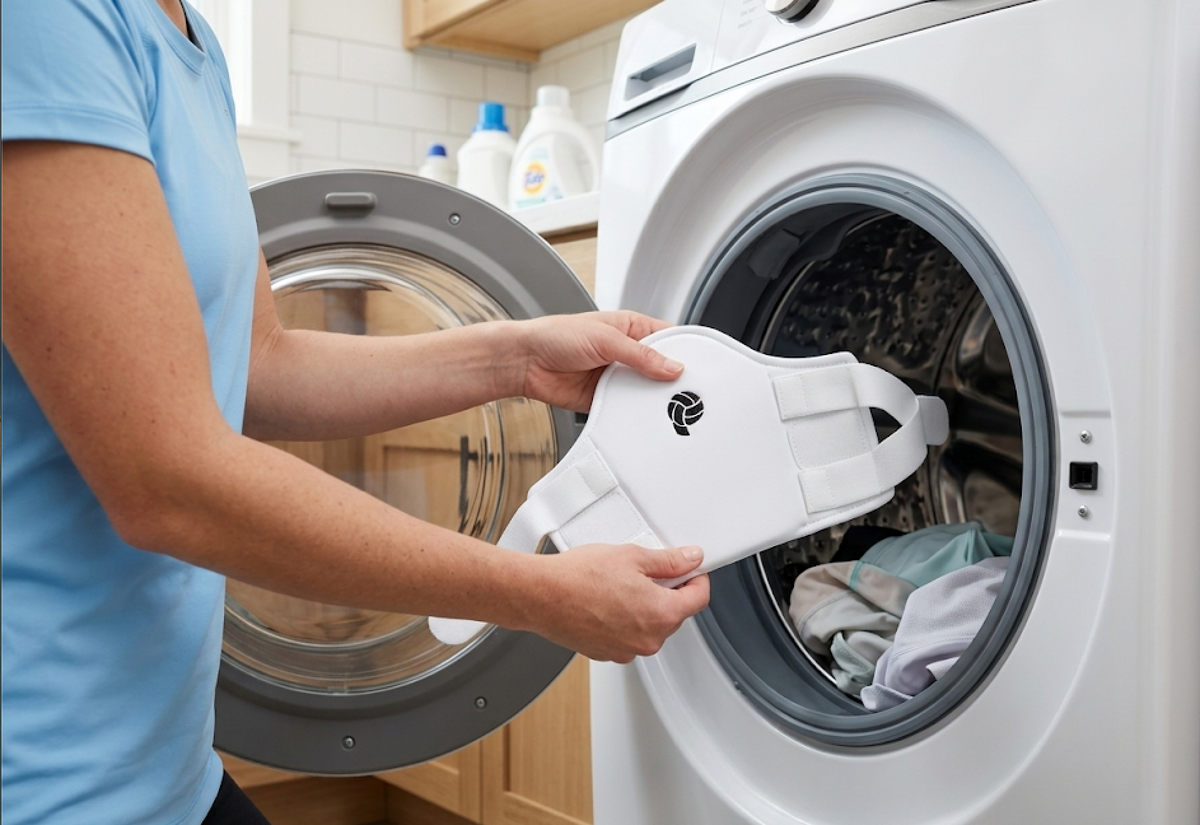
Do you find yourself holding your breath when you pull your knee pads out of your bag? We’ve all been there. Washing your knee pads can seem like an extra hassle, but protective gear should get the same cleaning treatment as uniforms. However unlike clothes, cleaning knee pads isn’t as simple as throwing them in the laundry.
This blog is a guide to clean both kinds of knee pads: sleeves with foam sewn in, and pads with an insert you can take out.
Why Washing Matters
Your knee pads sit against your skin, soak up sweat, and remain in a gym bag for hours. We all know that we should wash our workout clothes after every use. But the American Academy of Dermatology (AAD) also recommends washing your sports bag and cleaning protective gear regularly. If they go unwashed, bacteria and oils can clog pores and cause irritation.
That means bumps or a rash behind your knee can come from dirty pads. Cleaning your pads consistently also helps them last longer and protect you better.
General Care Tips
- After every match or tournament day: Wash the fabric.
- Between washes: Take your pads out of your bag as soon as you get home so they can air out.
- If your skin gets irritated: Wash them before the next session. Make sure they are thoroughly clean and dry before wearing them again. If a rash doesn't go away, talk to a doctor.
- Never share pads: The AAD says not to share protective gear, even if a teammate offers.
If your pad has a removable insert, you don't need to wash the foam every time. The fabric touches your skin and soaks up the sweat, so wash that more often and clean the foam when it feels damp or smells.
What Washing Does to the Foam
Most knee pads use EVA foam. Here's what to know about it.
- It resists water, but the pad can still stay wet. EVA is a closed-cell foam, which means water doesn't soak into it easily. However, the fabric, seams, and the space around the foam can still hold water, especially in a sleeve where the foam can't come out.
- Damp pads can get moldy. The EPA says mold needs moisture to grow, so you need to let your pads air out. Don't zip a damp pad into your bag.
- Heat can warp it. EVA has low heat resistance and can soften, shrink, or lose its shape when it gets too hot. Once it warps, it doesn't go back. Hot water and hot dryers are the biggest risk.
- The fabric doesn't like heat either. Stretchy fabric can tighten or weaken in high heat, so the pad can bunch up or sit differently on your knee. The knee pad should be treated like your activewear, since they probably are made from similar fabric.
- Twisting and wringing cause damage. Press the water out instead.
Pads With Foam Sewn In
Since the foam can't come out, the whole pad gets wet. Wash gently and focus on drying.
- Hand wash if you can. Use a sink of cool water and a little mild detergent. Squeeze the pad gently and let it soak for a few minutes.
- Rinse well. Leftover soap can bother your skin.
- Machine wash only if the label allows it. Use a gentle cycle, cool water, and a mesh laundry bag.
- Skip the dryer. Press the water out with a towel, then lay the pad flat or hang it where air can move. Make sure it's dry all the way through before it goes back in your bag.
Pads With a Removable Insert
- Take the insert out before washing. Our knee pad has an opening at the bottom to remove the pad.
- Wash the sleeve like other workout clothes: cool water on a gentle cycle. Since our knee pads have velcro, fasten the straps before washing so it doesn’t snag.
- Clean the foam by hand. Wipe both sides with a cloth dipped in cool water and a few drops of mild soap, then wipe again with plain water to remove the soap. Press gently with a dry towel to absorb the water from the pad. Don't wring or twist it.
- Air dry both pieces flat, away from heaters and direct sun. Harsh sunlight can wear down the foam's surface.
- Put the insert back in once both parts are completely dry.
Pull the insert out after every practice or gameday, even if you aren't washing it. Letting both pieces air out is one of the easiest ways to cut down on odor and prevent mold.
Myths About Making Pads Smell Better
Most quick fixes could actually make your pad smell worse or cause more irritation.
- "Perfume or body spray will do it." Body odor comes from bacteria breaking down sweat, and perfume doesn't remove either one. Fragrance can also irritate skin, and the AAD lists it as a common allergen.
- "Rubbing deodorant on the pad will keep it fresh." This is the same as spraying perfume. If you’re rubbing it on the outside, this could leave marks on the court when you dive.
- "Dryer sheets or fabric softener will make them smell clean." They leave a coating on the fabric that can keep it from wicking sweat well.
- "Hot water or the dryer will kill the smell." Heat can warp the foam and damage the fabric.
- "Zipping them in a bag will keep them fresh." A closed bag traps moisture, and moisture is what mold needs to grow.
If your pads still smell after a wash, wash them again in cool water, rinse well, and dry them completely in open air. Washing your gym bag can also go a long way, especially if you throw your dirty knee pads and clothes inside after playing.
Final Takeaway
Just remember: wash often, use cool water, avoid heat, skip the scents, and let your pads dry all the way through. If you do that, your pads will fit better, last longer, and be easier on your skin.
Sources
American Academy of Dermatology Association. (n.d.). Could your workout be causing your acne? Retrieved October 2026, from https://www.aad.org/public/diseases/acne/causes/workouts
American Academy of Dermatology Association. (2020, December 14). Eczema types: Contact dermatitis causes. https://www.aad.org/public/diseases/eczema/types/contact-dermatitis/causes
American Academy of Dermatology Association. (n.d.). How to prevent skin conditions in athletes. Retrieved October 2026, from https://www.aad.org/public/everyday-care/skin-care-secrets/routine/preventing-athletic-skin-infections
Algeos. (2026, March 15). EVA material properties and applications. https://www.algeos.com/company-news/post/algeos-product-guides/eva-material-properties-and-applications
Damao Tech. (2026, January 12). What is EVA foam? Uses, limits & lifespan 2026. https://www.damao-tech.com/blog/disadvantages-of-eva-foam-limitations
Damao Tech. (2026, July 8). EVA foam heat resistance: Melting point, shrinkage & fire safety. https://www.damao-tech.com/blog/eva-foam-heat-resistance-melting-point
NI Direct. (2025, December 2). Body odour. https://www.nidirect.gov.uk/node/12107
Quiksilver. (n.d.). How to wash, clean and care for your wetsuit. Retrieved October 2026, from https://www.quiksilver.com/blogs/expert-guides/how-to-care-wetsuit
REI Co-op. (n.d.). What does moisture-wicking mean? Retrieved October 2026, from https://www.rei.com/learn/expert-advice/what-does-moisture-wicking-mean.html
Sportek. (2026, January 6). Does spandex shrink in the dryer? Why you should be careful. https://sportek.com/blogs/news/does-spandex-shrink-in-the-dryer-why-you-should-be-cadoes-spandex-shrink-in-the-dryerreful
U.S. Environmental Protection Agency. (2026, February 18). A brief guide to mold, moisture, and your home. https://www.epa.gov/mold/brief-guide-mold-moisture-and-your-home