
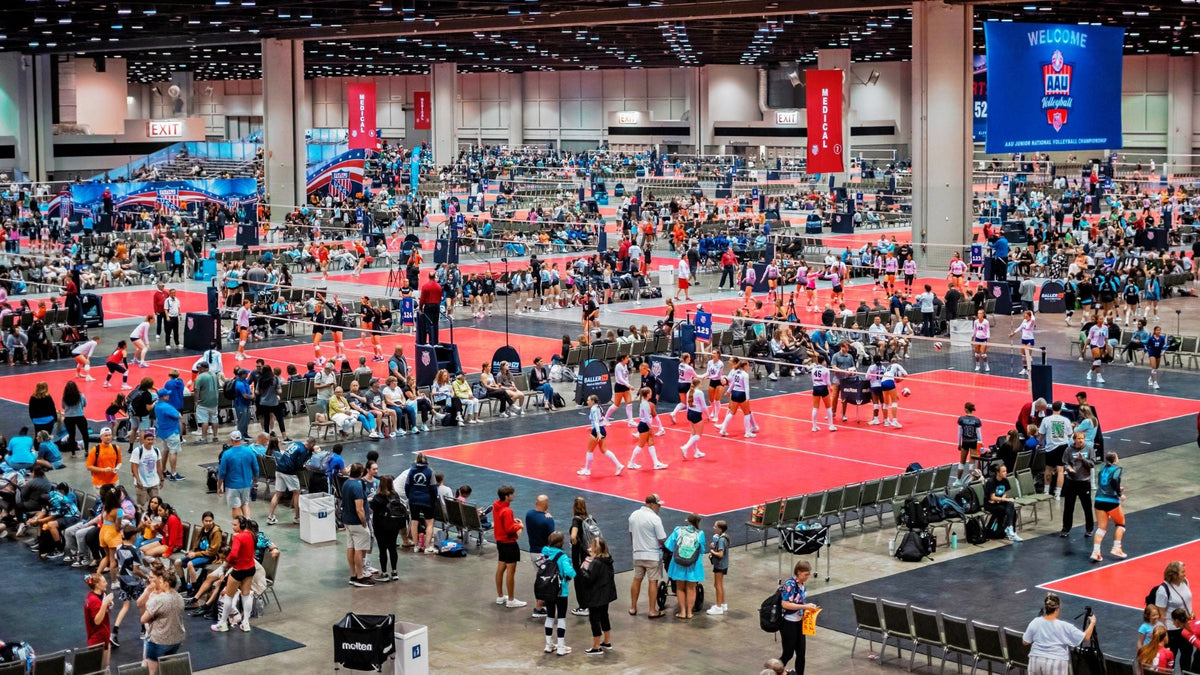
Not everyone who loves volleyball is going to play professionally, and that's okay, because the sport needs a lot more than players. Behind every team there's someone running the social accounts, cuing the video board, selling tickets, taping ankles, and tracking stats.
And the best news: there’s never been a better time to work in volleyball. Professional leagues like LOVB and MLV are continuing to grow both in popularity and teams. More teams means more jobs in the front office, on the sidelines, and behind the camera.
Below, we break down where you can work, what the jobs involve, and how to start building a resume while you're still in college. This list is just an overview of the opportunities available, so we encourage you to do your own research into each role.
Where You Can Work
Club
Club is where most players begin, and it employs coaches, directors, and administrators. LOVB also works through clubs: each pro team is tied to anchor clubs in its market, and LOVB calls itself "the largest community of clubs in the country." Larger clubs will also have roles in social media or photography/videography, which is a great starting point to build your resume. You can also freelance for larger organizations that host tournaments.
College
Every college team runs on more than players and coaches. Athletic departments hire for communications, ticketing, game operations, athletic training, strength and conditioning, video, and leadership. They also run student-worker programs, which are often the easiest first step if you’re enrolled in that university. One college's game day staff job, for example, has students operating the scoreboard, playing music, serving as public address announcer, and running video replay.
Professional
LOVB's job board lists roles in finance, legal, marketing, media, ticketing, event operations, and technical operations. At this level, experience matters. A senior social media role at LOVB asks for five or more years working for a professional sports team, which is why starting early in college and club settings pays off. As the league expands, more jobs will be available.
Media and Marketing
Social Media and Content
Social teams cover everything from matches, practices, and community events. They also track engagement and reach. Some roles may include filming and editing, so having camera skills could enhance your application.
Build your resume:
- Run (or help run) a team, club, or school volleyball account, and keep track of which posts perform best
- Learn to shoot and edit short video on your phone
- Save your analytics as proof of what you've done and how you’ve grown an account’s following and engagement
Photographer and Videographer
If you want to be a photographer or videographer, you need to know how to operate a professional camera. This content could be used on social media, but it could also be used for marketing, video board, or players personal socials, especially if you’re a photographer. Familiarity with Adobe Creative Suite (Premiere Pro, After Effects, Photoshop) is standard across all professional teams. Having a portfolio to apply for these roles is essential.
Build your resume:
- Photograph and film your school's or a club's matches, and build a portfolio from the best work
- Learn the Adobe programs above, as well as skills like lighting
- Offer to assist a working photographer or videographer at a tournament
Graphic Designer
Designers create the visuals fans see, like schedule graphics, lineup announcements, and tournament posters. Graphic designers typically need a bachelor's degree in graphic design or a related fine arts field, and employers rely on portfolios in hiring decisions. Many designers gain experience through internships while still in college.
Build your resume:
- Design volleyball pieces for a club or school team, such as match-day graphics and posters
- Put them in a portfolio you can share with an employer
- Utilize your resources at school to get an internship
Game Presentation
Game presentation is the show fans see and hear during a match. Responsibilities include running video boards, cuing sound, and executing lighting effects, as well as coordinating performances like cheerleaders and mascots. You could also manage the PA announcer, in-arena host, and stage managers. Anything could go wrong during gameday, so you need to be calm in stressful situations and extremely organized to keep everything running as scheduled.
Build your resume:
- Apply for student game day jobs that involve the scoreboard, music, announcing, or video replay
- Directing or producing skills are also valuable
Sports Communications
Communications staff write recaps, manage websites, and work with media. Public relations specialists typically need a bachelor's degree, and you can get writing experience through a school newspaper, social media platforms, or blogs. Personable skills are valued, as you’ll be working with and facilitating relationships between the media, players, and coaches.
Build your resume:
- Write for a school newspaper, website, or blog
- Apply for a student media relations assistant job in your athletic department
- Look into CSC's student programs
Broadcasting
Broadcast roles include announcing, camera work, replay, and production. Broadcast announcers typically need a bachelor's degree in journalism, broadcasting, or communications. Experience with your school radio and TV station are helpful, especially so you can build a resume, and (more importantly) a reel of your best times on camera. If you’re interested in broadcasting, it’s suggested that you start posting your work to social media as well since both formats are necessary.
Build your resume:
- Join your school's radio or TV station
- Practice calling club or school matches and stream or record them
- Create your own social media page and cover topics (like teams or sports) you’re interested in
Business and Operations
Ticket Sales and Partnerships
Ticket sales put you in direct contact with fans and the business side of a team. During the season, roles include outbound sales calls and emails, customer service for season ticket members and groups, and keeping records in a CRM. Some ticket sales jobs are seasonal. Internships prefers students pursuing sports management, business, marketing, or communications, and says "participation in collegiate organizations, athletics, or volunteer activities is a plus." Partnership roles focus on sponsors, so relationship building and communication skills are a must.
Build your resume:
- Take a ticket office or box office internship or student job
- Get sales, fundraising, or customer service experience
- Learn a CRM program
Finance
Pro teams and athletic departments need people to handle accounting, budgets, and financial planning. Accountants typically need a bachelor's degree in accounting or a related field, and earning a CPA license can improve job prospects.
Build your resume:
- Major in accounting or finance
- Ask your athletic department about student jobs or internships in the business office
- Take on a treasurer role in a campus club or team
Community Impact
Community teams connect a team with fans, schools, and youth clubs. The LOVB Foundation's mission is "to increase access to and opportunities through volleyball," and it runs grants, free camps, and Volley in the Park, a set of free community events. Besides connecting with younger players, you’ll develop relationships with non profits. You’ll also work with players and coaches when they go to these events, and there may be opportunities to work one on one if they are interested in a specific organization or cause.
Build your resume:
- Volunteer at youth clinics and community volleyball events
- Organize a clinic or park event of your own
- Apply for community relations internships
Mascot and Fan Entertainment
Being a mascot isn’t as easy as it may seem. Mascots are performers, and most student mascots start by trying out at their school. According to U.S. News, tryouts vary by school and can be competitive, with an application, an interview, and performances or skits. Behind the scenes, mascots may run their own social media accounts, foster relationships with the community, and plan events outside of matches. You need to be charismatic, energetic, and ready for long days with constant fan interaction.
Build your resume:
- Try out for your school's mascot or spirit program
- Practice performing for a crowd
- Use the same skills in fan engagement or game presentation roles
Event and Tournament Operations
Events teams plan the logistics behind matches and tournaments, from catering food for staff to hiring vendors. Event planners typically need a bachelor's degree, and lists coordinating university or volunteer events and shadowing professionals as helpful experience.
Build your resume:
- Volunteer at club tournaments in operations
- Help run a school or club event from start to finish
- Shadow someone who plans events
Directors and Leadership
Leadership roles often come after years of experience in other jobs. LOVB's Regional Club Leader role, which oversees a group of youth clubs and supervises their directors, asked for five to seven years leading a youth volleyball club or working in youth sports. You’ll be responsible for managing a division of people and ensuring that goals are being met.
Build your resume:
- Start by managing something small, like a team, a tournament, or a club program
- Add coaching or administrative experience
- Study business, sport management, or a related field
Coaching and Sport Performance
Coaches
Requirements and experience for coaching jobs vary by level. Some college coaches start as graduate assistants or assistant coaches and work their way up. For junior club coaching, certification may be required. The American Volleyball Coaches Association (AVCA) lists a career center, a mentoring program, and internship opportunities on its site.
Build your resume:
- Coach a youth or club team
- Complete IMPACT and SafeSport
- Join the AVCA and look into its mentoring program
Video Coordinator and Analytics
These staff members capture, code, and analyze match video. Familiarity with platforms like Hudl, Volleymetrics, and Volleystation could be beneficial. You could also create scouting reports, and tracking team and individual metrics. Depending on the role, you could work directly with teams and players to assist with video review. Basic camera skills are needed.
Build your resume:
- Volunteer to film and tag matches for your team
- Learn the software programs named above
- Pair a major in sport science, analytics, or a related field with experience
Athletic Trainer
Athletic trainers handle injury prevention, treatment, and rehabilitation. Athletic trainers typically need a master's degree from an accredited program, and nearly all states require a license or certification. This is a career path that starts your freshman or sophomore year to make sure you take all the necessary classes. Physical therapists are a related sports medicine role and need a Doctor of Physical Therapy degree and a state license.
Build your resume:
- Look up accredited athletic training master's programs early and note their prerequisites
- Choose a major that fits those prerequisites
- Shadow a certified athletic trainer, such as the one at your school
Strength and Conditioning
Strength coaches design training, testing, and recovery programs. Get a bachelor's degree in exercise science, kinesiology, or a related field. You may also need a CSCS or similar nationally recognized credential and CPR/AED certification. Former athletes are some of the strongest candidates for these roles because you know the training firsthand.
Build your resume:
- Do research into what certifications you’ll need
- Work with a team's strength staff to start building organized-sport experience
Sport Psychology and Mental Performance
Mental performance consultants help athletes build skills like focus and confidence. To become a Certified Mental Performance Consultant through the Association for Applied Sport Psychology, you need a master's or doctoral degree in an area clearly related to sport science or psychology, a 400-hour mentored experience that includes at least 200 hours of direct client contact, and a passing exam score. This is another path that requires planning in advance to make sure you meet all the requirements to move onto graduate school.
Build your resume:
- Study psychology or sport science and get involved in research or internships
- Look into graduate programs early
- Read about sport psychology as you play or coach
Referees and Officials
Officials are crucial for volleyball matches at any level. To become a USA Volleyball official, you start by contacting your region. Most regions require a clinic, an exam, and an evaluation, and all officials must pass a background check and complete SafeSport training.
Build your resume:
- Contact your USA Volleyball region
- Attend a clinic and learn the rules
- Work matches to gain experience, especially if you want to eventually officiate collegiate or professional games
Entrepreneurship
This list wouldn't be complete without mentioning entrepreneurship. Starting your own business is a very rewarding career path, especially if you're filling a gap or solving a problem that you noticed as a player. That's how our business started: our CEO couldn't find knee pads that were protective and comfortable. So during college, so used her resources in the business school to build Protector Innovations and tapped into Auburn's collegiate team to design our knee pad, the Patella Protector. If you have a business idea, we encourage you to explore it.
Building Your Resume Now
No matter what career you're interested in, here are some tips that apply across every role:
- Say yes to student jobs. Game day staff, media relations assistants, and ticket office interns are the easiest ways to get real experience.
- Build a portfolio. For media and design roles, this is necessary to apply to any job.
- Get certifications early. CPR/AED, SafeSport, and IMPACT show up in postings across coaching and sport performance.
- Match your major to the path. Understand that you may need a degree to be eligible for a job, especially if it requires a graduate or doctorate degree.
- Use your volleyball background. Strong knowledge of volleyball and the women's sports landscape enhances your resume.
- Ask about pay and timing. Internships often pay little and are for a set duration (like one season). Have a financial plan and a timeline of when you need to apply for your next job. If you take an internship, make the most of it and make as many connections as possible. The sports world is very small, and all it takes is one connection to get your next opportunity.
Final Takeaway
A career in volleyball doesn't have to end when your club or collegiate days are over. College athletic departments, club programs, and the growing pro leagues all need people with different skills, and many of those skills can be built while you're still a student. Making the most of your opportunities in college or in your local community can make all the difference when you’re applying for jobs.