
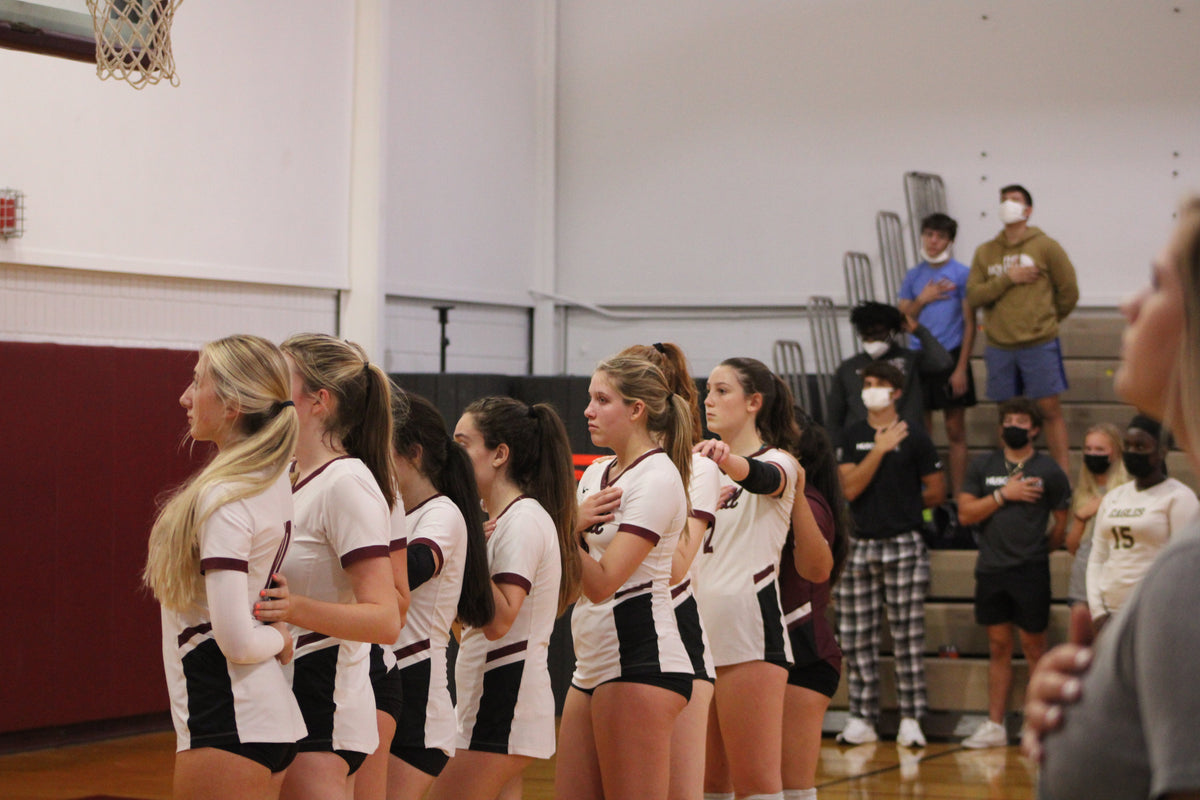
If you've ever sat in a gym watching your kid play and thought, "I have no idea what’s going on," you're not alone. If you didn’t play volleyball, it can be hard to understand the language and rules.
This guide covers what you need to know before the season starts. By the end, you’ll know how the game works, what each position does, how club season runs, what to ask before you join a club, and how to be a great parent for your athlete.
The Basics of the Game
You don't need to know every rule to enjoy a match. These are the main ones, based on the international rules from the FIVB, the sport's world governing body.
- Rally scoring: The team that wins a rally gets the point, whether or not it serves.
- Sets and matches: Depending on the level, teams play best of 3 or 5 sets. If it’s best of 5, sets one through four go to 25 points and a fifth set goes to 15. If it’s best of 3, sets one and two go to 25 points, and the third set goes to 15. A team has to win by two points every set, and the first team to win three sets wins the match.
- Three contacts: Each team can touch the ball up to three times before sending it over the net. A typical sequence is a pass, a set, and an attack. For indoors, a block doesn't count as one of the three touches.
- Rotation: Players rotate clockwise each time their team wins the serve back. Only the three front-row players can attack or block at the net.
- Libero’s Jersey: One player on the team wears a different-colored jersey. This is the libero, and they can replace any back-row player throughout the game. However, they can't serve, attack over the net, or rotate into the front row. Typically liberos are the best at digging attacks from the other team and controlling the ball.
Positions, Explained
Most players have overlapping roles, but there are still unique skills for each position:
- Setter: The "quarterback" of the offense. The setter usually takes the second touch and sets the ball for a hitter.
- Outside hitter: The main attacker. Outsides also pass, play defense, and block.
- Middle blocker: The core of the team's net defense. Middles block, cover the center of the net, and attack quick sets.
- Opposite hitter: Attacks from the right side and helps block, often against the other team's outside hitter.
- Libero: A back-row player who focuses on passing and digging.
- Defensive specialist (DS): A player who typically subs into the back row to strengthen passing and defense. Unlike a libero, a DS uses standard substitution rules.
How Club Season Works
Club volleyball is typically set up to be more competitive than school or rec play. Most clubs are their own organization with their own tryouts and fees.
USA Volleyball says junior club tryouts usually take place from July through October for the upcoming season, and the season generally runs from mid-November to early July. The first tournaments start in January, but club practices can start when the school season ends. Teams without a national bid usually finish around late April. It’s important to be proactive if your player is interested in playing club so you don’t miss the tryout window.
Tournaments could last a day or a weekend. Some are held in small local gyms or massive convention centers with hundreds of teams. Clubs that want to compete nationally play in qualifier tournaments, and the season ends with the USA Volleyball Junior National Championships during the summer.
How to Choose a Club
Here are a few tips worth keeping in mind so you and your player enjoy the season:
- Don't assume bigger is better. Size and price aren’t the only factors to consider. To find the best fit for your player, you should also look at the coaches and club culture.
- Compare several clubs. If there is more than one option, consider the pros and cons of each. Decide which one fits your player's goals, commitment level, and budget.
- Try out for more than one. Each club has its own registration, and trying out for several gives you a backup if your top choice doesn't offer a spot. If you live near a top tier club, keep in mind that these teams are extremely competitive, especially since volleyball is growing every year.
No matter what, you should think about your family's schedule, including school, other sports, and travel, and whether practice times and locations work for you. Depending on the club and level, volleyball could become the only extracurricular your player has time for once the season starts.
Questions to Ask Each Club
If you have a chance to talk with a club while deciding which one is the best fit, here are some questions to ask:
- How many teams do you have at each age group, and who coaches mine?
- How do you select players?
- What's your philosophy? Does everyone play, or is it about winning?
- What are the fees, and what does that cover?
- What other costs should we expect, like travel, uniforms, and fundraising?
- How often and where do you practice, and are practices mandatory?
- How long is the season, and how far will the team travel?
What to Bring to a Tournament
Tournaments can consume an entire weekend, and you'll spend a lot of time waiting between matches. Here are some tips to make your first tournament easier:
- Triple check your player bag to make sure they packed all the equipment and gear they need. There’s nothing worse than realizing you didn’t pack shoes right before warm ups.
- Some venues only have basic snack food like chips or candy. Make sure your athlete brings whatever snacks they need to feel and play their best throughout the day.
- Convention centers are freezing and seating can be limited. Bring extra layers and have a chair in case you can’t find somewhere to sit. Chairs are also nice for your player between matches.
- If the courts you’re playing on are in the middle of the convention center, you probably won’t have access to an outlet. It’s always good to bring a portable charger.
- There will be long periods of waiting, especially if your player has to help ref or keep score for another game. Make sure you both have something to do. If you’re in a walkable location, the best way to kill time is to take a walk to get food or coffee.
How to Cheer (and What Not to Do)
The way you act on the sideline and talk to your athlete about their performance has a bigger effect than you’d think:
- Before the match: Focus on effort and preparation, not results, and remind your player to have fun and do their best.
- During the match: Keep your tone and body language positive. Praise good plays, and encourage your player after mistakes. All the parents sitting around the court can hear your comments about your kid… or theirs.
- Leave the coaching to the coaches. Don't coach from the sideline or question the coach's instructions during play. Also don’t argue with officials. If there is a dispute that affects the game, an official could ask you to leave.
- After the match: Give feedback on effort and attitude, and skip the long analysis on the car ride home. Wait until your player is ready to talk, then ask what they thought.
- Say thank you to the coaches. It’s easy to take for granted the time and dedication coaches have, but showing appreciation can go a long way.
Watch for Burnout
A busy club schedule can wear a player down. Burnout usually comes from too much training and not enough rest, according to Dr. Kelly Davis, a pediatric sports medicine doctor at Children's Hospital of Orange County (CHOC). It can show up as soreness, constant tiredness, trouble sleeping, slipping grades, or uncharacteristic moodiness. Your player may also stop being excited about volleyball, even though they're still putting in the effort.
If you notice that, it's worth slowing down and talking with them. If your athlete starts the sport young and that’s the only sport they play year round, encourage true breaks between seasons.
Final Takeaway
You don't have to be a former volleyball player to be a great volleyball parent. The best way to start is learn the basics, ask questions before you join a club, encourage without coaching, and pay attention to how your player is doing off the court too.
Sources
Arizona Region Volleyball. (n.d.). Frequently asked questions. USA Volleyball. Retrieved October 2026, from https://www.azregionvolleyball.org/faq
CHOC Children's. (2023, November 9). How to prevent burnout in young athletes. https://health.choc.org/how-to-prevent-burnout-in-young-athletes/
Fédération Internationale de Volleyball. (n.d.). Basic rules. Retrieved October 2026, from https://www.fivb.com/volleyball/the-game/basic-rules/
Junior Volleyball Association. (n.d.). Choosing a volleyball club. Retrieved October 2026, from https://jvavolleyball.org/choosing-volleyball-club/
OrthoInfo, American Academy of Orthopaedic Surgeons. (n.d.). Volleyball injury prevention. Retrieved October 2026, from https://www.orthoinfo.org/staying-healthy/volleyball-injury-prevention
Positive Coaching Alliance. (n.d.). 8 sideline behavior tips for parents on gameday. Retrieved October 2026, from https://devzone.positivecoach.org/resource/externallink/8-sideline-behavior-tips-parents-gameday
USA Volleyball. (n.d.). Picking a club. Retrieved October 2026, from https://usavolleyball.org/resource/picking-a-club/
USA Volleyball. (n.d.). The path to a national championship. Retrieved October 2026, from https://usavolleyball.org/compete/
US Sports Camps. (n.d.). Volleyball positions every parent should know. Retrieved October 2026, from https://www.ussportscamps.com/tips/volleyball/parents-guide-to-volleyball-knowing-the-positions
Utah State University Youth Sport Parent Education. (n.d.). Sideline behavior. Retrieved October 2026, from https://youthsportparenteducation.usu.edu/parent-modules/sideline-behavior